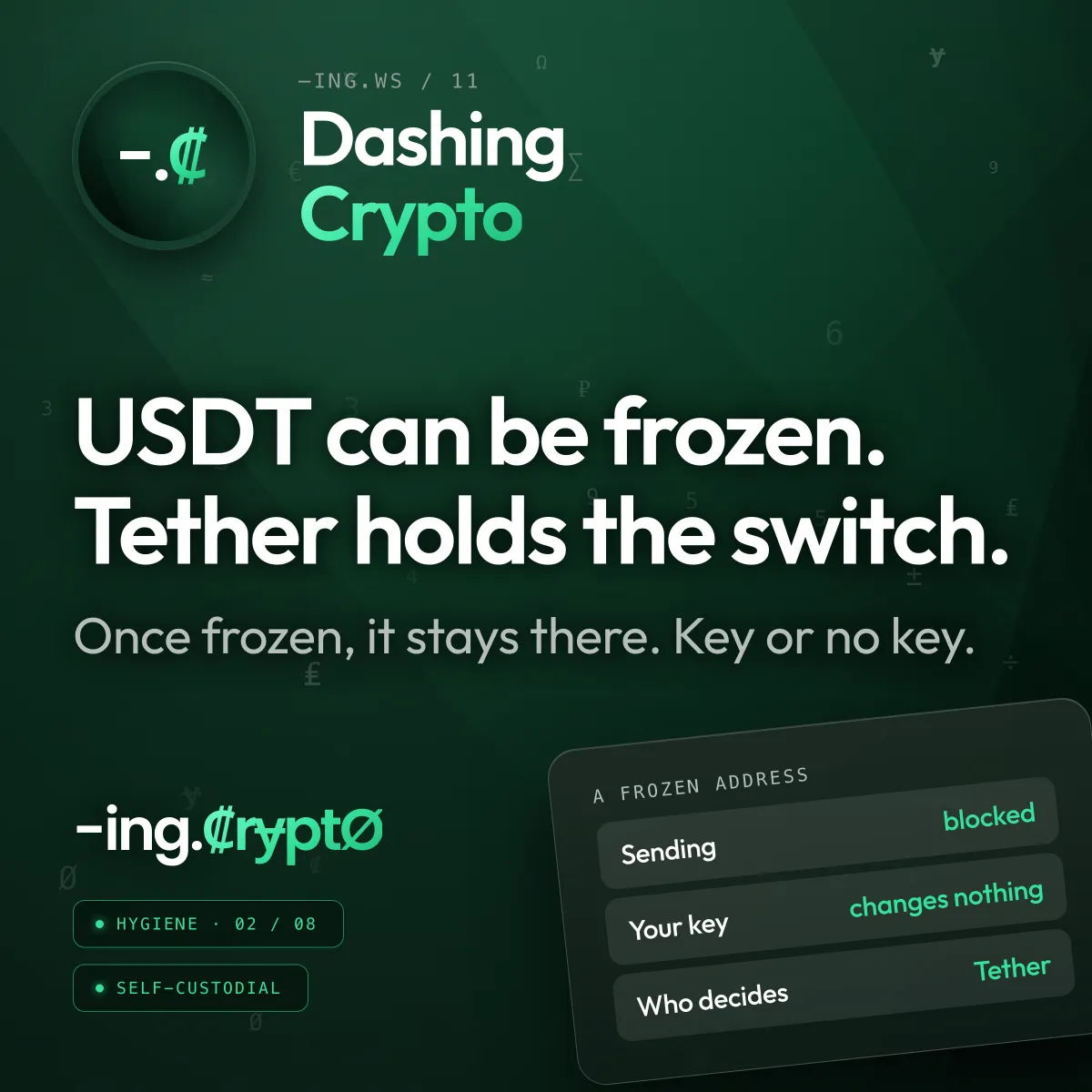
USDT is issued by a company called Tether, and Tether kept one power for itself: it can freeze the USDT at any address, at any time.
It uses that power, usually when a police force or a sanctions list asks. Once an address is frozen, whatever sits there stays there. Nobody can send it out, and that includes the person holding the key.
How does an address end up on that list? Rarely because of anything its owner did that day. Mostly because of where the money had been before. Every transfer is public and permanent, so there are companies whose entire business is following USDT from address to address and giving each one a score. Money that passed through a hacked exchange, a scam or a sanctioned service carries the mark with it, and an address that receives that money picks up some of the mark too.
So every address has a reputation, like a credit score, built from the money that has ever landed in it. You never signed up for one, and it follows your address anyway.
FROM HYGIENERead the long version